Hybrid Workplace Solutions: Enabling the Future of Work for Indian Enterprises
Hybrid Workplace Solutions

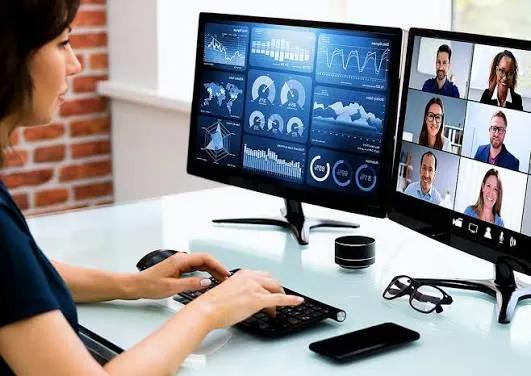
The nine-to-five, five-day-a-week office routine is no longer the default for most Indian enterprises. Employees now move between home, office, and client sites in the same week, expecting the same level of access, collaboration, and support wherever they log in from. Meeting this expectation reliably, without compromising security or productivity, is exactly what hybrid workplace solutions are built to deliver.
For CIOs and business leaders across India, choosing the right hybrid workplace solutions has become a defining decision — one that affects talent retention, operational resilience, and how competitive an organization looks to the professionals it wants to hire. Schnell Technocraft works with enterprises across industries to design and implement this kind of environment in a way that is secure, well-governed, and genuinely easy for employees to use every day.
What Are Hybrid Workplace Solutions?
Hybrid workplace solutions refer to the combination of cloud platforms, collaboration tools, device management systems, and security frameworks that allow employees to work productively whether they're in a corporate office, at home, or travelling. Rather than treating remote access as an exception that IT scrambles to support, these solutions are designed from the ground up to make flexible work the norm, with consistent performance, governance, and user experience regardless of location.
Why Hybrid Workplace Solutions Matter for Indian Businesses
The shift toward flexible work in India was already underway before the pandemic, driven by the growth of cloud adoption and distributed teams across cities. The pandemic simply accelerated a change that was already inevitable, and it made a well-designed hybrid work strategy inseparable from how organizations attract and retain talent. According to industry research, a large share of employees now expect at least some ongoing flexibility in where and how they work, and organizations without a coherent answer to this expectation risk losing ground to competitors who have already adapted.
Beyond talent considerations, there are practical business reasons that make hybrid workplace solutions a priority:
Business continuity: Operations can continue smoothly even when a physical office is disrupted by weather, infrastructure issues, or citywide events, because employees aren't dependent on a single location to get work done.
Cost efficiency: Reduced dependency on large, fully occupied office spaces can lower real estate and facility costs while still supporting a productive workforce.
Broader talent access: Organizations are no longer limited to hiring people within commuting distance of a single office, which opens access to skilled professionals across the country.
Improved employee experience: Consistent, well-supported access to tools and systems reduces daily friction and IT frustration, which directly affects morale and engagement.
Core Elements of Effective Hybrid Workplace Solutions
Building an environment that genuinely supports flexible work requires several components working together to form complete hybrid workplace solutions, rather than a single tool bolted onto existing infrastructure.
Cloud-Based Productivity Suites
Platforms such as Microsoft 365 and Google Workspace form the backbone of any flexible work environment, giving employees consistent access to email, documents, and collaborative editing tools from any device, without relying on on-premises servers.
Unified Communication and Collaboration
Chat, video conferencing, and voice tools need to work together seamlessly so that meetings, messages, and shared files feel connected rather than scattered across disconnected apps. This is one of the areas where poorly integrated tools most visibly frustrate employees.
Virtual Desktop Infrastructure
For roles that require access to sensitive data or specific applications, virtual desktops provide a secure, standardized environment that can be accessed from any device without storing data locally — a critical safeguard when employees are working outside a controlled office network.
Mobile Device Management
With employees using a mix of personal and company-issued devices, mobile device management ensures that flexibility doesn't come at the cost of security. Policies can be enforced remotely, and devices can be secured or wiped if lost or stolen.
Workplace Analytics
Understanding how employees actually use tools and time helps leadership identify friction points, measure adoption, and continuously refine the experience rather than guessing at what's working.
Security and Identity Management
Every element above depends on strong identity verification, endpoint protection, and access controls. Without this foundation, flexibility introduces risk rather than resolving it.
Common Challenges in Adopting Hybrid Work Models
Many Indian organizations run into predictable obstacles when rolling out hybrid workplace solutions:
Legacy infrastructure: Systems built for a fully on-premises workforce often struggle to support secure remote access without significant rework.
Slow adoption: Employees and managers accustomed to in-office routines can be slow to adapt to new collaboration habits without clear guidance and structured training.
Security gaps: Access extended beyond the office perimeter without matching identity and endpoint controls creates exactly the kind of exposure attackers look for.
Fragmented tooling: Without a clear governance framework, tools tend to be adopted inconsistently across departments, creating a disjointed experience rather than a unified one.
Inconsistent employee experience: Performance and access quality can vary sharply between locations if the underlying network and cloud architecture weren't designed with flexibility in mind from the start.
These challenges are exactly why organizations benefit from working with a partner who has guided this transition before, rather than treating it as a one-off IT project handled in isolation.
How Schnell Technocraft Delivers Hybrid Workplace Solutions
Schnell Technocraft's Modern Workplace practice is built around the recognition that every organization's path to flexible work looks different, shaped by its existing infrastructure, industry requirements, and workforce distribution. Rather than offering a generic package, Schnell Technocraft works closely with each client to assess their current environment and design an approach suited to their specific goals.
The hybrid workplace solutions delivered by Schnell Technocraft span consulting and architectural services, including adoption roadmaps built around Microsoft 365 and Google Workspace; design and implementation aligned with Microsoft best practices, including migration off legacy platforms; managed services that keep the environment healthy and properly licensed over time; and structured change management that includes training programs and end-user communication, ensuring employees actually adopt the new tools rather than reverting to old habits. This full-lifecycle approach connects with related offerings across the Schnell Technocraft Digital First portfolio, including Virtual Desktop Infrastructure and broader Workplace Transformations, giving Indian enterprises a complete framework rather than a collection of disconnected tools. The full breadth of this approach is detailed on the Modern Workplace service page.
Steps to Building a Successful Hybrid Work Strategy
Organizations approaching this shift for the first time tend to see better outcomes with a structured, phased plan rather than attempting a single large rollout.
Assess the current environment — Understand existing tools, infrastructure gaps, and specific employee pain points before selecting new technology.
Define clear objectives — Whether the priority is cost reduction, talent access, or improved collaboration, the approach should be tied to measurable outcomes.
Select the right platform foundation — Most organizations build around Microsoft 365 or Google Workspace, depending on existing investments and team familiarity.
Build security in from the start — Identity management, device policies, and access controls should be designed alongside collaboration tools, not added afterward.
Invest in change management — Technology alone won't drive adoption; training and clear communication are what make new habits stick.
Measure and refine continuously — Use workplace analytics to track adoption and identify where the experience still needs improvement.
The Business Case Beyond Flexibility
While employee experience is often the starting point for this conversation, well-designed hybrid workplace solutions also deliver measurable business value. Reduced real estate overhead, faster onboarding for distributed teams, and lower IT support costs from standardized, well-managed environments all contribute to a clearer return on investment. Leadership teams evaluating these programs increasingly look beyond employee satisfaction scores to metrics like reduced downtime, faster issue resolution, and improved audit outcomes — all of which a properly governed flexible work environment tends to improve over time.
Conclusion
Hybrid workplace solutions have moved from an optional upgrade to a core requirement for Indian businesses that want to compete for talent, maintain operational resilience, and keep employees productive regardless of where they're working from. Organizations that treat this as a genuine strategic initiative, backed by the right technology and change management, are the ones best positioned to see lasting results rather than a short-term fix.
Schnell Technocraft brings the consulting expertise, technical depth, and change management discipline needed to help Indian enterprises design and implement an approach that fits their specific business, security, and workforce needs. Organizations ready to modernize how their teams work can connect with Schnell Technocraft to build a roadmap suited to their goals and infrastructure.